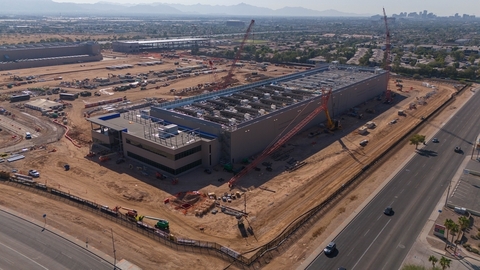
Amid the growing data center boom, data center PR is more crucial than ever. With backlash from communities on data center construction to moratoriums being enacted in data center “goldmines,” data center PR can assist in effectively educating communities about the projects and help avoid controversies surrounding the rapidly expanding construction. Read more below about recent news regarding data center application, construction and legislation in the U.S.
New York to Enact Nation’s First Statewide Moratorium on Data Centers – The New York Times
Gov. Kathy Hochul of New York signed an executive order on Tuesday placing a one-year pause on the construction of the largest data centers, putting the state at the forefront of the national debate over artificial intelligence companies’ impact on American landscapes and energy grids. The order, the first of its kind to be enacted in the United States, will temporarily bar the state from approving permits for so-called hyperscale data centers, which use 50 or more megawatts of power to operate. During the pause, New York will develop a regulatory framework for assessing how these behemoth projects affect the environment.
The order will take effect immediately. It is not expected to affect the data demands of back-office financial services, hospitals or universities. The news was met with criticism from tech business groups and several construction unions that had expected to benefit from the building of data centers.
Officials in Wyoming said a contractor for Mark Zuckerberg’s tech company, Meta, flushed bacteria-contaminated water into public sewers during construction of a controversial new AI datacenter. The incident prompted water authorities in Cheyenne to implement strict safety regulations on how wastewater from such projects is disposed of, according to the Wyoming Tribune Eagle, which first reported the incident.
The new regulations adopted by Cheyenne, Strong told the Tribune Eagle, requires companies using closed loop cooling systems to build and implement separate collection systems that direct water from cooling equipment or associated floor drains into storage tanks and offsite disposal, rather than flushing it into the city’s sanitary sewer.
Michigan utility refuses water for data center as Google plan seeks power equal to that for 2 million homes – The Cool Down
A surge of proposals has put Michigan squarely in the middle of the data center buildout, according to The Conversation. More than 30 projects have been pitched in the state over the past two years, during a period when Gov. Gretchen Whitmer has openly courted technology investment.
Power demand is also under scrutiny. The Conversation reported that in Van Buren Township, Google’s planned data center could require “2.7 gigawatts of electricity — a massive amount of power equivalent to the demand of about 2 million homes,” according to a local news report. Michigan lawmakers have approved exemptions that spare data center operators from some sales and use taxes, and DTE Energy told state lawmakers that the proposed data center in Van Buren Township would not increase customers’ power rates.
AI data-centre race builds $1 trillion lease burden for Big Tech – Reuters
If demand for AI computing continues to surge, the facilities will underpin the next phase of cloud growth. If it does not, the companies could be left paying for vast amounts of costly, long-lived capacity that is difficult to shed.The total is nearly four times the roughly $285 billion of lease liabilities already recognised on the companies’ balance sheets, according to company filings compiled by Reuters.
The gap reflects accounting treatment. Signed leases generally are not recorded as liabilities until a facility is available for use. Until then, companies disclose the future payments in notes to their financial statements.The commitments are not hidden, and rating agencies may already account for some of them. But their scale reveals how much of the AI buildout has yet to enter reported lease liabilities, fixed charges and reported leverage measures.
Texas freezes new data center projects to shield grid from overload – USA Today
Texas Gov. Greg Abbott has issued a temporary halt to new data center grid connections, mandating that state regulators audit each project before it can advance. Abbott directed the Public Utility Commission of Texas (PUCT) and the Electric Reliability Council of Texas (ERCOT) on Monday, Aug. 3, to conduct a comprehensive verification and audit of all data centers advancing through ERCOT’s interconnection process.
Currently, ERCOT is considering around 474 gigawatts of requests to connect to the Texas grid, more than five times ERCOT’s record peak demand, with data centers accounting for about 90% of the new power requests.
142 AI data center protests staged in 42 states as public opposition increases — organizers brand ‘unaccountable’ buildouts as an ‘unacceptable infringement on our liberty’ – Tom’s Hardware
More than 70% of Americans now oppose data centers, which has resulted in bipartisan moves to block these projects. This pushback isn’t limited to just a few people or towns, either. In fact, a coordinated protest was organized just this weekend, happening in 142 different venues across 42 states, and is the first one to happen simultaneously across the U.S. Forbes reports that this makes community consent scarcer than the chips and other equipment and resources needed to build and run these sites. As Reuters notes, the organizers behind the protests have branded the “unaccountable” data center buildout as an “unacceptable infringement on our liberty.”
Developers have employed various techniques to get around these bans and opposition. This includes picking sites in rural areas with fewer people (thus less resistance), bringing their own electricity, or claiming that their data centers use less water than lawn care and gardening. But despite all their promises of jobs, investment, and tax revenue, the American public has grown wary of suffering from the consequences of having a data center as a neighbor. This is especially true after reports of increased utility rates, water quality issues, noise pollution problems, and more have widely circulated around the country.
$130 Billion In AI Data Centers Stalled. The Bottleneck Is Consent – Forbes
In the first three months of 2026, local opposition blocked or delayed at least 75 data center projects worth roughly $130 billion, according to Data Center Watch. That’s the group’s count, not a government total, and it roughly matches all of 2025. Data centers like these help run AI for companies such as Meta, Amazon, and Microsoft, but a growing number of towns don’t want them nearby.
Developers argue that these projects bring investment, tax revenue, construction work, and upgrades to roads and utilities. Gallup found that two-thirds of supporters pointed to local economic benefits, especially jobs. That case weakens when the benefits are vague but the concerns are easy to name: water use, diesel generators, and questions about utility rates. A community-benefit plan has to be specific enough to survive a hearing.
Information for All – How Does Your Data Center Organization Share It?
As construction of data centers expands across the U.S., educating communities and practicing clear communication is important. FischTank PR is a leading PR firm that focuses on result-centered communications, ensuring messaging around data center construction, technical infrastructure, and sustainable development reaches key stakeholders for your company.
Navigating the data center PR world can be complex, and we’re here to help. If you’re interested in securing exposure for your company, reach out to us at [email protected].
***News roundup guest post from FischTank PR interns Alexa Topolski and Julia Kindig***